
Blog
Wonders of the Ancient World: A Journey Through Time
Introduction
The ancient world was a time of incredible human achievements, marked by architectural wonders that continue to captivate our imaginations even today. These iconic structures, known as the Wonders of the Ancient World, were marvels of their time and a testament to the creativity, engineering prowess, and cultural significance of the civilizations that built them. In this blog, we will embark on a journey through time to explore these seven wonders that have left an indelible mark on history.
The Great Pyramid of Giza, Egypt
The Great Pyramid of Giza, also known as the Pyramid of Khufu, is the last standing wonder of the ancient world. Built around 2560 BC, this colossal limestone and granite structure stands as a testament to the architectural and engineering achievements of the ancient Egyptians. It held the title of the world’s tallest man-made structure for over 3,800 years.
The Hanging Gardens of Babylon
The Hanging Gardens of Babylon are often attributed to King Nebuchadnezzar II, who reigned over Babylon in the 6th century BC. These terraced gardens were said to be an oasis of greenery and exotic plants, elevated above the ground. Although their existence is debated by historians, the idea of the Hanging Gardens has sparked the imagination for centuries.
The Statue of Zeus at Olympia, Greece
The Statue of Zeus at Olympia, created by the Greek sculptor Phidias around 430 BC, was a colossal gold and ivory statue of the king of the Greek gods. Standing over 40 feet tall, it resided in the Temple of Zeus in Olympia and was renowned for its intricate detail and grandeur.
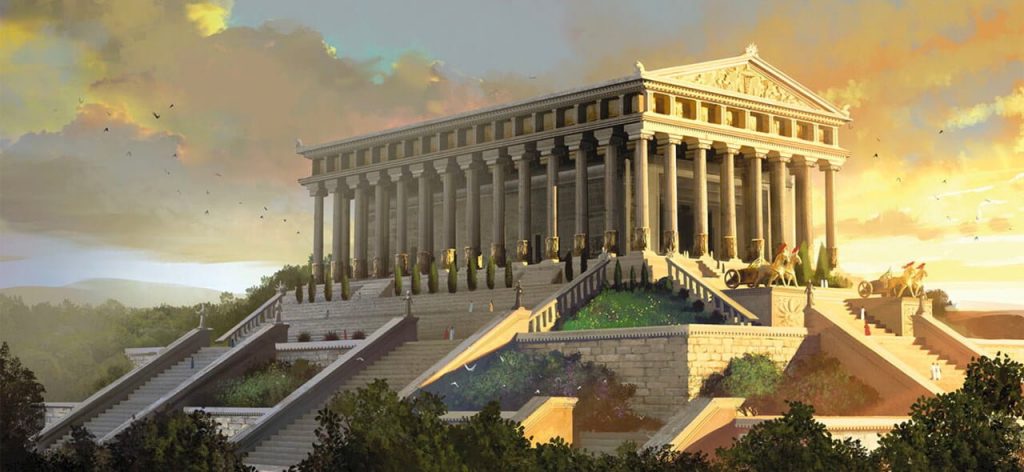
The Temple of Artemis at Ephesus, Turkey
The Temple of Artemis at Ephesus was one of the grandest temples of the ancient world, dedicated to the Greek goddess Artemis. Its construction spanned centuries, with the final version completed around 550 BC. This monumental structure was known for its grand columns and intricate artwork.
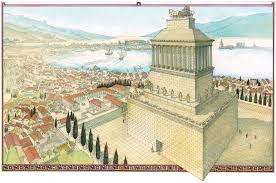
The Mausoleum at Halicarnassus, Turkey
The Mausoleum at Halicarnassus was a grand tomb built by Queen Artemisia II of Caria for her husband Mausolus, around 350 BC. This magnificent structure, featuring a series of ornate sculptures and a pyramid-like roof, gave rise to the term “mausoleum.”
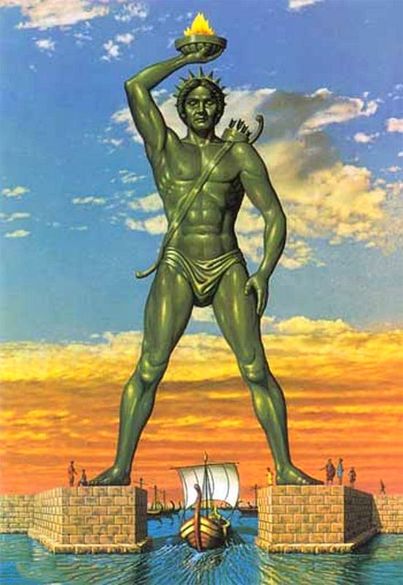
The Colossus of Rhodes, Greece
The Colossus of Rhodes was an enormous bronze statue of the Greek sun god Helios, erected on the island of Rhodes in the 3rd century BC. Towering over 100 feet, it was considered one of the tallest statues of the ancient world, though it stood for only a brief period before toppling in an earthquake.
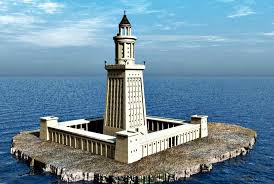
The Lighthouse of Alexandria, Egypt
The Lighthouse of Alexandria, also known as the Pharos of Alexandria, was a remarkable structure built on the island of Pharos in the 3rd century BC. It served as a guiding beacon for sailors, its light said to be visible from many miles away. The lighthouse was an engineering marvel of its time.
Conclusion
The Wonders of the Ancient World were architectural and artistic triumphs that reflected the aspirations and capabilities of their respective civilizations. While most of these marvels have long vanished from the Earth, their legacy endures in historical accounts, art, and our collective imagination. They remind us of the enduring human spirit and our ability to create lasting monuments that continue to inspire and awe us through the ages. These ancient wonders stand as a testament to human ingenuity and the indomitable pursuit of excellence.